Written by Natasha Stewart
There’s a certain feeling you get when you arrive at Oceanfront Camping at Wolfe’s Neck Center.
Maybe it’s the crunch of tires on a dirt road. Maybe it’s the first glimpse of the ocean across open fields.
Or maybe it’s something harder to define, a sense that this place has been here, just like this, for a long time.
That feeling isn’t accidental. It’s by design.
And it all started with a simple but powerful idea: protect the land, keep it working and make sure people can experience it.
Campground with a Purpose
In 1961, Lawrence M.C. Smith and his spouse Eleanor Houston Smith began developing a plan to open campsites on Wolfe’s Neck, nearly two centuries after the land was first passed down through the Anderson family. The idea was both practical and purposeful. Revenue from camping would help sustain the farm, but the campground would also serve as an entry point, inviting people into a landscape shaped by farming, history and the Maine coast.
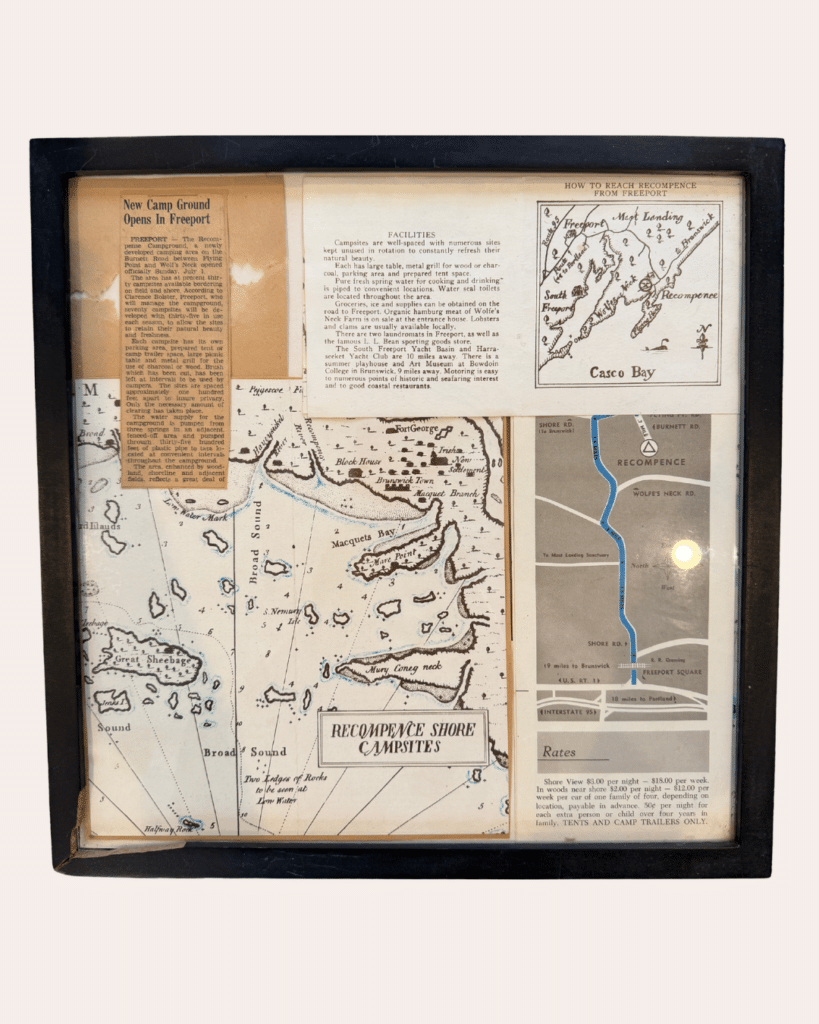
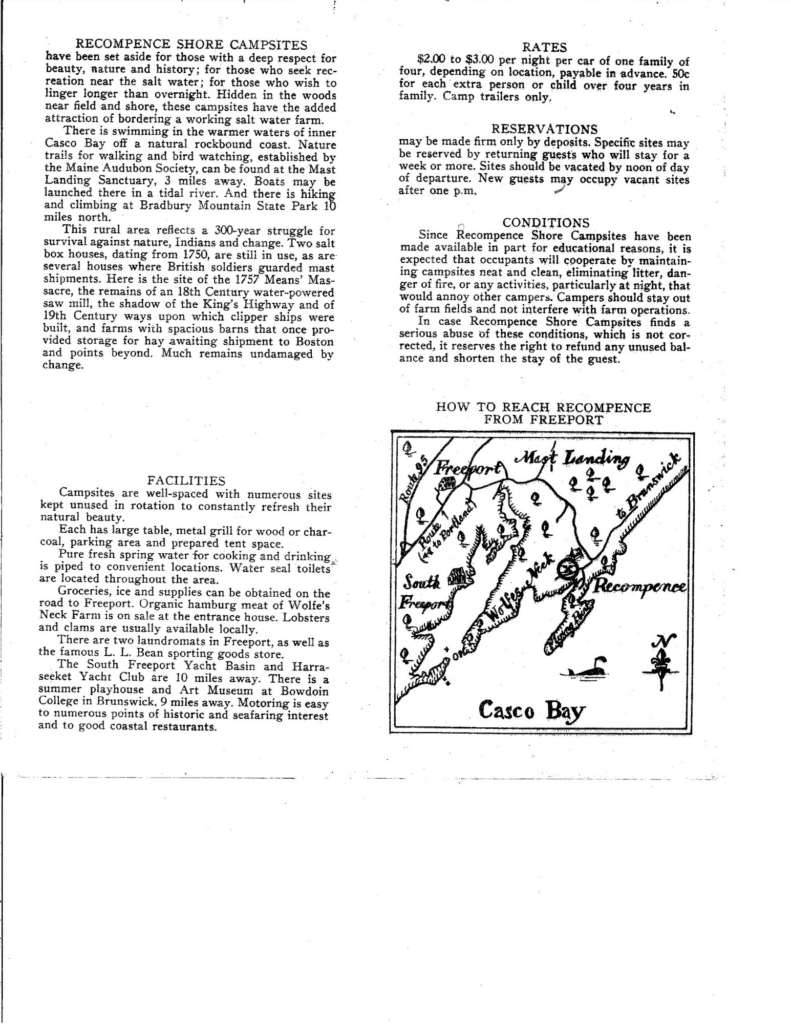
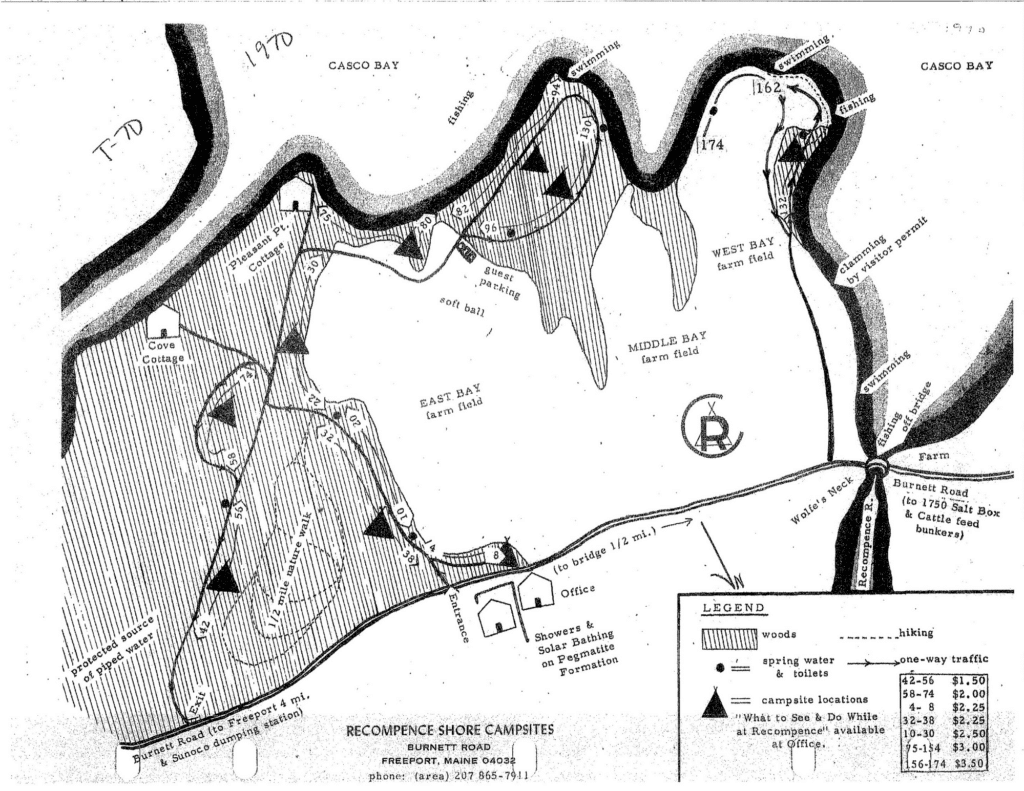
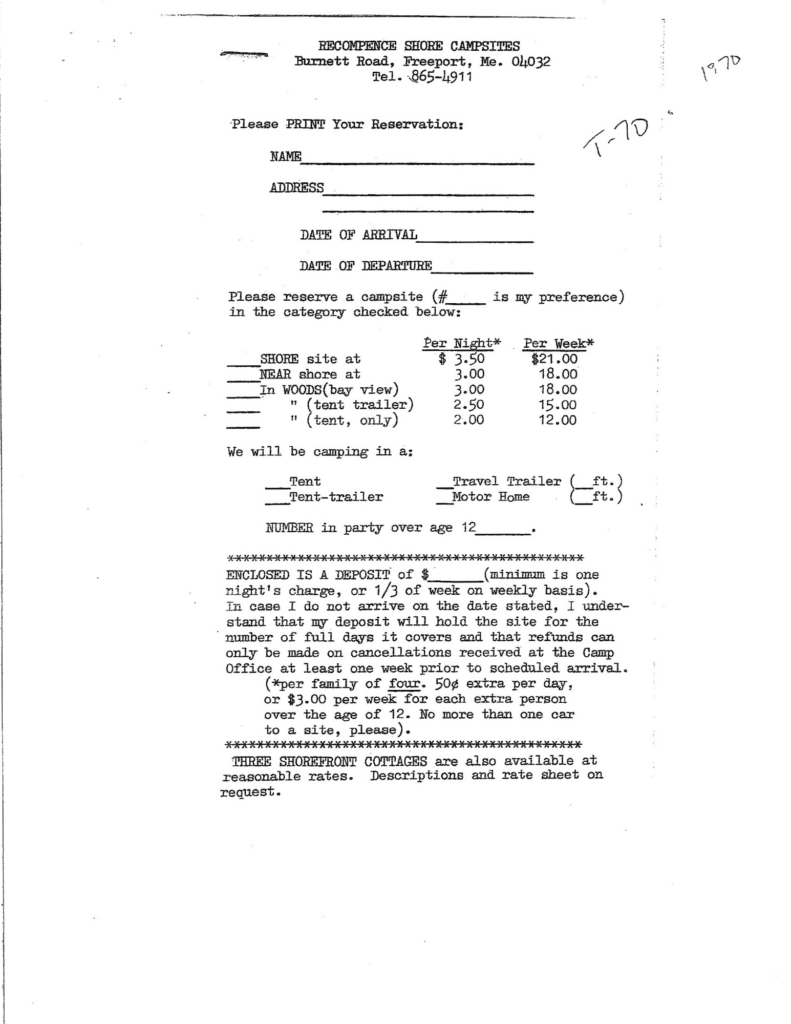
With the help of a three-year development plan, the first campsites opened in 1962. They were simple by design, just fire pits, outhouses and access to spring water, with no electric hookups. A family of four could stay for just a few dollars a night, choosing a site tucked along fields or closer to the ocean.
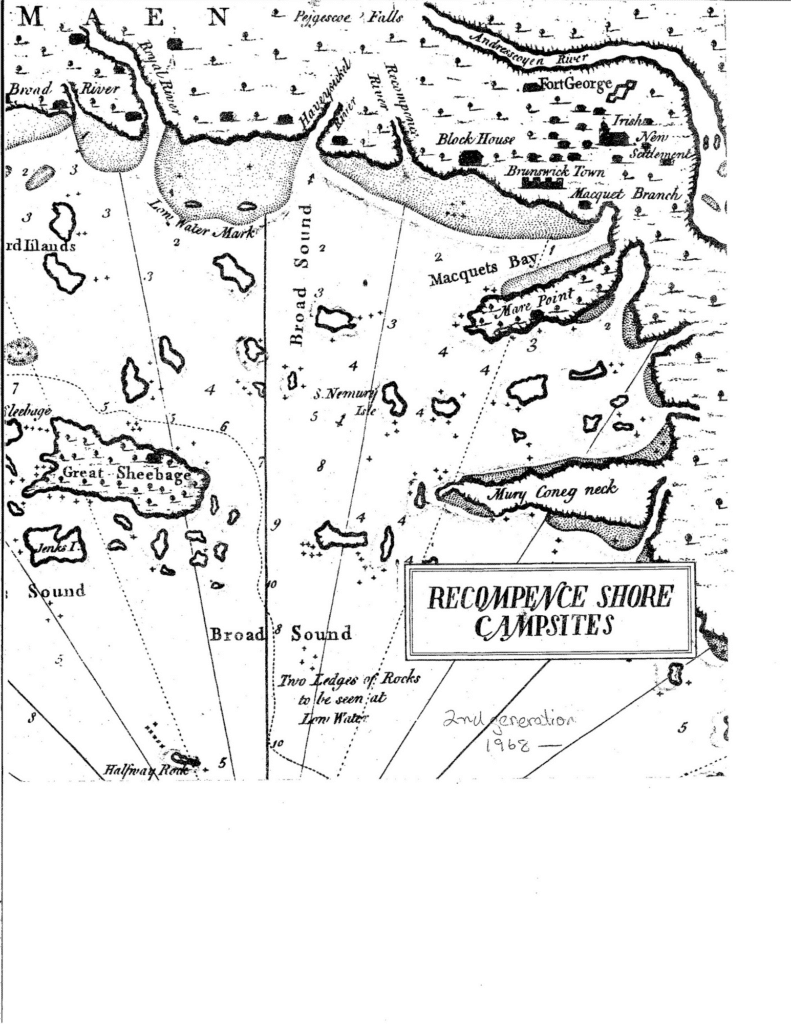
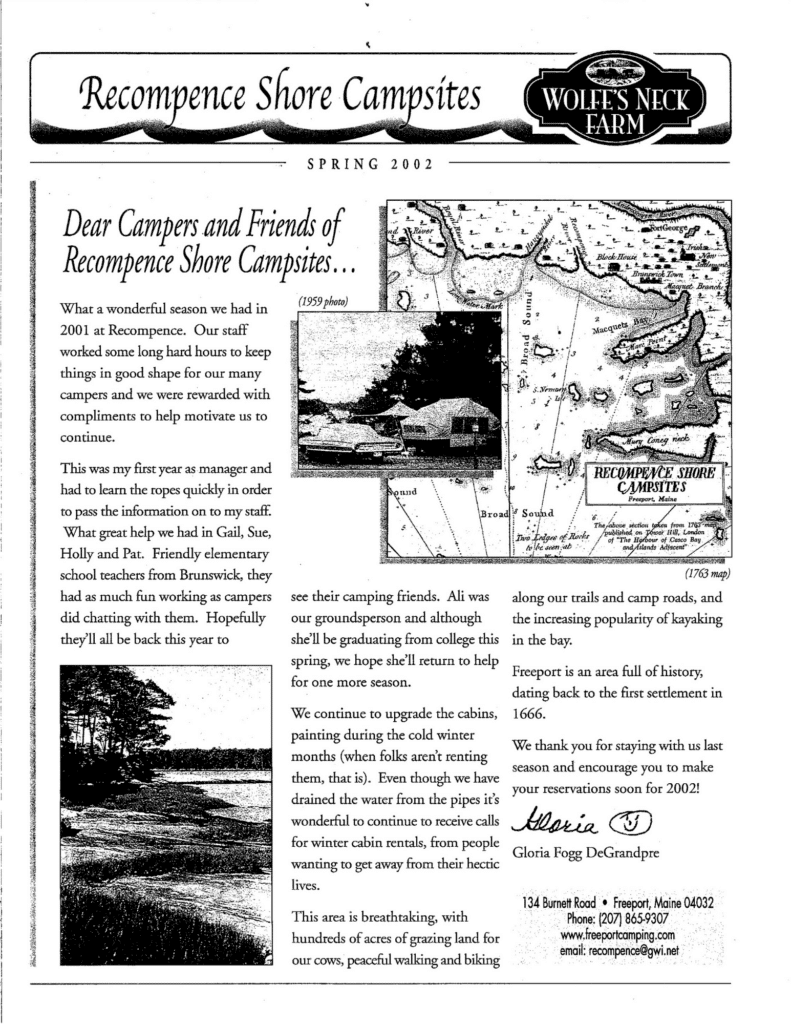
Even the name reflected a deeper intention. “Recompence,” drawn from an 18th-century map of Casco Bay, was the historic name for the Little River that runs through the property. To the Smiths, it meant something more than geography. It represented rest and a place to reconnect with nature. That spirit carried through the original campground brochure, which described the site as a place for those with a deep respect for beauty, nature and history. Campers were encouraged to explore beyond their sites, to walk the trails, take in a landscape and view historic sites such as the 1750s era Saltbox House.
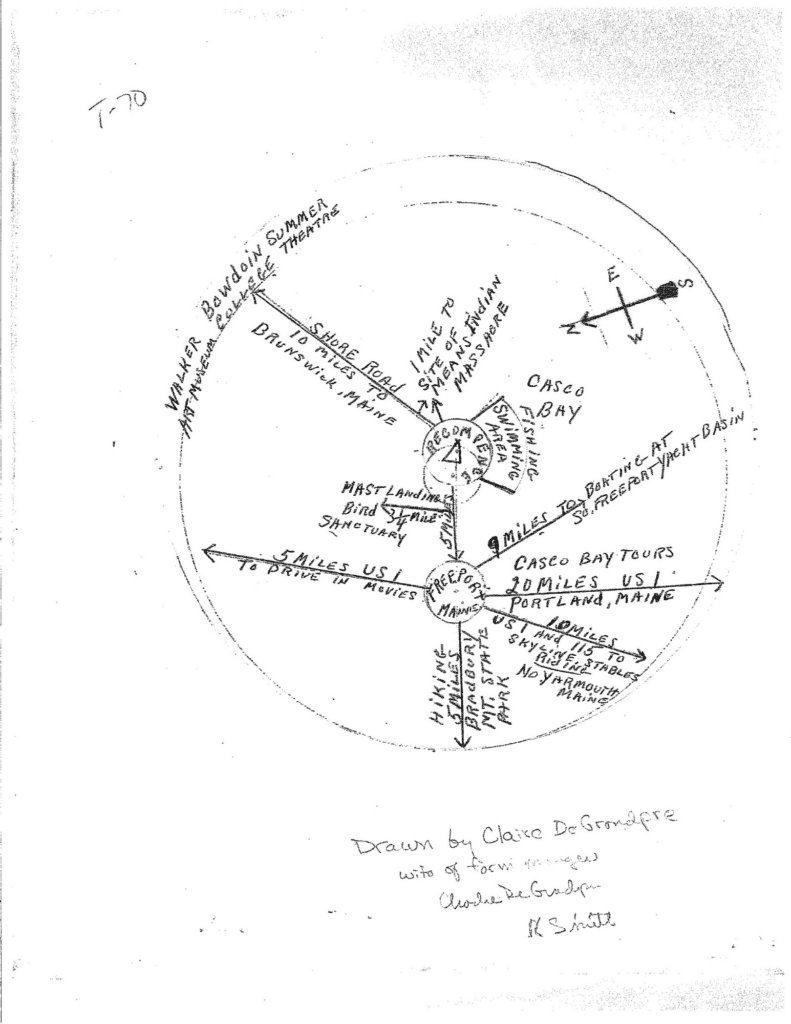
The decision of where to build the campground was not without debate. At one point, the family considered another historic property they owned in Freeport, Mast Landing, but after a mosquito-filled visit, they quickly returned to Wolfe’s Neck. Whether that moment sealed the decision or simply reinforced it, the outcome was clear. Placing the campground alongside open farmland and the ocean created something rare, a place where agriculture and coastline meet in full view. That relationship between land and water continues to define the experience today, guided by a simple principle: you should always be able to see the ocean across the fields.
In Dialogue with the Land
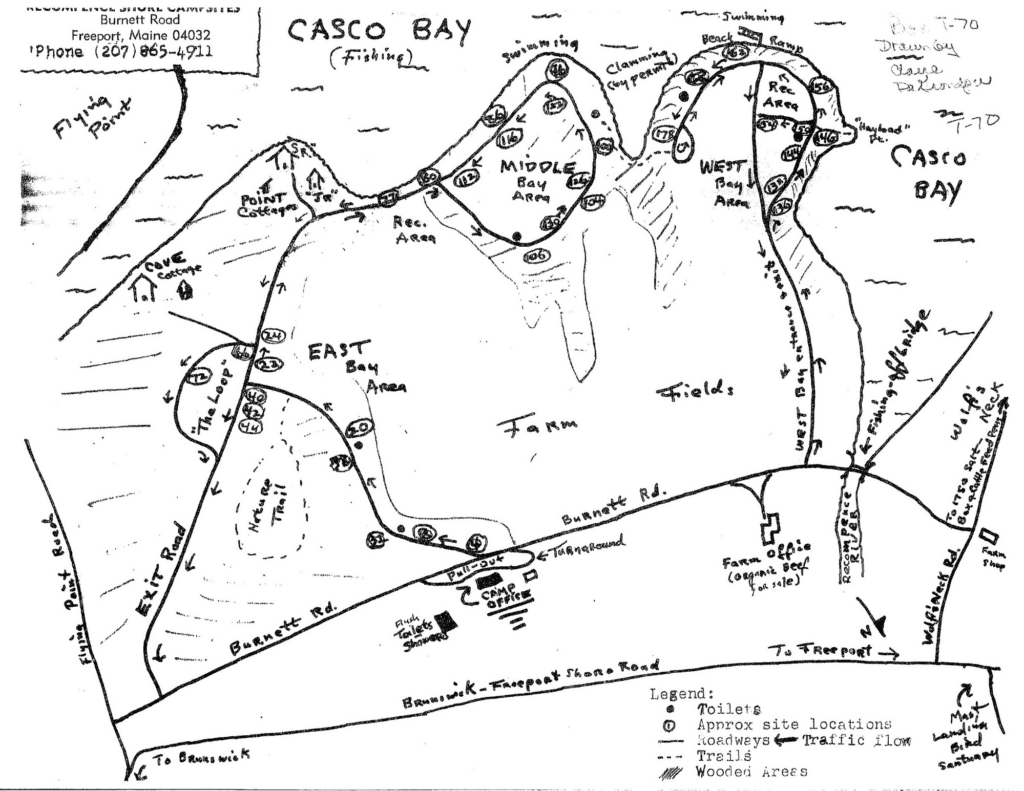
From the beginning, the campground was designed in dialogue with the landscape, not imposed on it. There was an expectation that you wouldn’t see campsites from Burnett Road, and that from the water, the land would appear much as it always had. Infrastructure was intentionally tucked away. Buildings were placed out of sight or painted to blend into the surroundings. Even today, that philosophy holds. As the land shifts through erosion and time, the campground adapts with it, maintaining a balance between access and preservation.
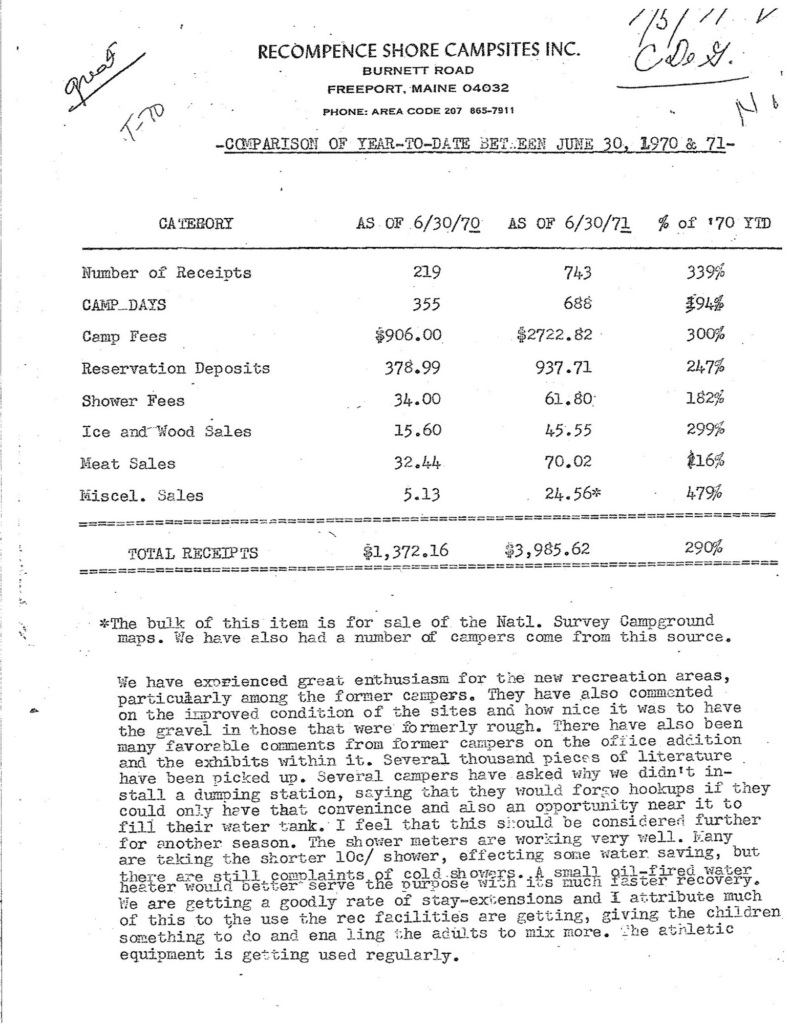
Over the years, the campground has grown, from a few dozen sites to more than 150 today, but it has never lost its sense of space. Spread across distinct areas, it offers a range of experiences, from open, energetic areas where families gather, to quieter, more tucked-away sites that feel closer to the original campground. What connects them all is a feeling of openness. It never feels overly crowded, in part because the land itself leads the design.
That sense of openness extends beyond the physical layout. For generations of campers, this has been a place of freedom. Kids ride bikes down dirt roads, moving in loose packs between campsites, shoreline and farm. They stop into the farm store for a snack or wander down to see the farm animals. There’s a saying from Eleanor Smith tied to this experience, that “everyone should have a dirt road in their life”. Here, that idea becomes real.
What truly sets Oceanfront Camping apart is its connection to the farm. For years, campers were invited to engage with it, stopping by the barns, visiting the garden or simply observing a working agricultural system in motion. That connection has only grown stronger over time. Today, campers can walk trails that reveal the geology of the land, see livestock grazing in nearby pastures and participate in programs that deepen their understanding of food, farming, history and the environment. Spaces like the Farm Café have served as gathering points, where meals made with ingredients from the land bring people together and reinforce the connection between what’s grown here and what’s shared.
The campground has also always been shaped by people. Much of the work has been supported by volunteers, including a dedicated group of women who helped tend gardens and support the farm and campground. Over time, staff, educators and returning seasonal teams have carried that work forward, alongside families who return year after year, building traditions of their own. It’s a place where history isn’t just something you learn about, it’s something you become part of.
As the Wolfe’s Neck Center organization evolved, so did the identity of the campground. In 2017, Recompence Shore Campground was reintroduced as Oceanfront Camping at Wolfe’s Neck Center. While the original name carried deep historical meaning, many visitors didn’t immediately connect the campground to the broader Wolfe’s Neck experience.
The new name helped bring that relationship into clearer focus, aligning the camping experience with the Center’s mission and reinforcing that this place is more than a destination, it’s part of a living, working system.
The Path Forward
Change has come, as it always does, but it has been thoughtful. Improvements to facilities, the addition of activities like kayaking and stand up paddle boarding, and expanded programming have made the campground more accessible while still preserving its original character. There’s an intentional balance, offering comfort for those who want it while maintaining simpler, more off-the-grid experiences for those who don’t.
At its core, Oceanfront Camping remains what it was always meant to be. A place to rest, to explore and to connect. To the land, to the ocean, to food and to each other. More than 60 years after it began, the same guiding ideas still shape every decision: protect the land, support the farm, provide access for all to the coast and create meaningful experiences for those who come here.
For many, a visit becomes a tradition. For others, it’s a discovery that stays with them long after they leave. Either way, it’s the kind of place that invites you back, again and again.